
The Inter-Play Between Armed Conflict Law, and International Human Rights law : Case Study and the Outcomes

UNDERSTANDING INTERNATIONAL LAW AND ITS APPLICATION THE UNRESOLVED TENSION BETWEEN LAW AND POLITICS: : The Challenges to Enforcement, Its Failure to Protect Civilians and the Injustice of VETO Power.
A brief summary
Beginnings in the Shadows: Personality and Statehood in International Law: Explore how abstract notions like ‘state recognition’ and ‘self-determination’ paint bold brushstrokes across a canvas of flux and political will, with breath-taking cases such as Kosovo advisory opinions emerging as the lighthouse guides in turbulent seas.
Weaving the Web: The Architectural Crafting of International Law: Journey through landmark battles like the Wimbledon and Lotus cases, ferociously dissecting customary law formation in a dance of conformity and dissent, echoing an age-old struggle between sovereignty and global justice.
The Legal Canvas: Treaty Lifecycles and the Dance of Consent: Investigate how words etched in parchment hold power; how the ICC Statute, Vienna Convention, and controversial reservations reveal the human struggle for meaning and control amid shifting geopolitical sands.
Responsibility’s Mirror: Claiming Accountability on the Global Stage: Trace the moral pulse through complex attributions—from state acts cloaked in shadows to collective liability—highlighting halting efforts to uphold jus cogens norms and confront dark catastrophes like the Rohingya genocide.
Courts, Councils, and Crusades: The Pursuit of Justice and Peace: Witness the United Nations’ arena—where ideals shimmer and dissolve—the grudging battles resembling constellations clashing in a dusk-lit sky, from peacekeeping gambits to the legal balancing act of use-of-force debates and security mandates, exemplified poignantly by stories such as Rwanda’s tragic testimonial.
The Unwritten Codes: Soft Law and the Hidden Shades of Obligation: This chapter uncovers how silent currents beneath formal treaties sculpt state behavior, creating a mosaic of expectation and realization that defies the sharp logic of strict legal boundaries.
State Continuity and Succession: The Phoenix of Nations: Through cases like Chagos’ advisory opinion, this chapter conjures visions of disintegrating mosaics that re-form into new patterns—political, legal, emotional palimpsests etched on Earth’s living map.
Interpreting the Unseen: Navigating Conflicting Obligations and Jurisdictions: Like decoding ancient sigils, the discourse blends juridical pragmatism with philosophical depth—highlighting interpretive battles waged within courts that ripple with consequences across international relations.
The Pulsing Veins of Justice: From Jus Cogens to Individual Rights: This chapter charts the clashing tides as law endeavors to shed light on atrocities, demand reparations, and envision a gravitational pull back to a sense of global moral order.
Peace’s Labyrinth: United Nations Security Council and the Quest for Stability: With vivid portrayals of political intrigue and humanitarian relief mingling in unequal measure, this chapter underscores contemporary dilemmas of sovereignty, intervention, and legitimacy.
Tides of Enforcement: The International Criminal Court and Transnational Justice: Through high-profile prosecutions and procedural complexities, the narrative captures existential questions of power, morality, and redemption on the grand international stage.
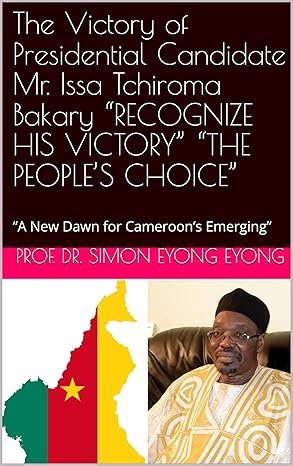
The Victory of Presidential Candidate Mr. Issa Tchiroma Bakary “RECOGNIZE HIS VICTORY” “THE PEOPLE’S CHOICE”: “A New Dawn for Cameroon’s Emerging”
The tumultuous history of Cameroon, beginning with the arrival of Portuguese explorers in 1472, leading to the establishment of colonial powers including the Germans in 1884 and the Dutch in the early 1600s. It covers the critical moment in 1959 when the United Nations General Assembly passed a resolution addressing French mandates, paving the way for French Cameroon’s independence in 1960 and the subsequent independence of Southern Cameroons in 1961.
These moments culminated in the reunification of both territories following the 1961 plebiscite. However, the subsequent decade saw the abolishment of the federal system in 1972, which set the stage for a centralized government under President Ahmadou Ahidjo, who resigned in 1982, leading to Paul Biya’s long rule.
The book chronicles the evolution of Cameroon’s political landscape through significant elections in 1992, 1997, 2004, 2011, and 2018, eventually leading to the historic victory of Issa Tchiroma on October 12, 2025. This section highlights the role of entities like the Constitutional Council, Elections Cameroon (ELECAM), and the judiciary, alongside the political parties that shape the national discourse. The narrative does not shy away from discussing the Southern Cameroons conflict from 2016 to 2025, the national dialogue attempts by Prime Minister Chief Dr. Dion Ngute, and the impact of strikes by teachers and lawyers, as well as the plight of jailed secessionist leaders. Tchiroma’s landslide victory is presented as a transformative moment for Cameroon, symbolizing hope for the people and a potential shift in governance.
The text concludes with a reflection on the future of Cameroon under Issa Tchiroma’s leadership, emphasizing the need for reform, anti-corruption measures, and healing the wounds of a divided nation. This comprehensive examination serves not only as a historical account but as a call to action for all Cameroonians, urging them to participate in shaping their nation’s destiny.
IMMUNITY of World Leaders In International Law:: Shield of Atrocities
Historical Foundations of State Immunities
The concept of state immunity has deep historical roots, embedded in the fabric of international law and relations. Its foundations can be traced back to ancient times, where sovereigns held a divine right to rule, establishing an unwritten legal principle that they were above the law. This principle persisted through the evolution of early legal frameworks, giving rise to a well-trodden pathway for heads of state to operate free from accountability for their actions.
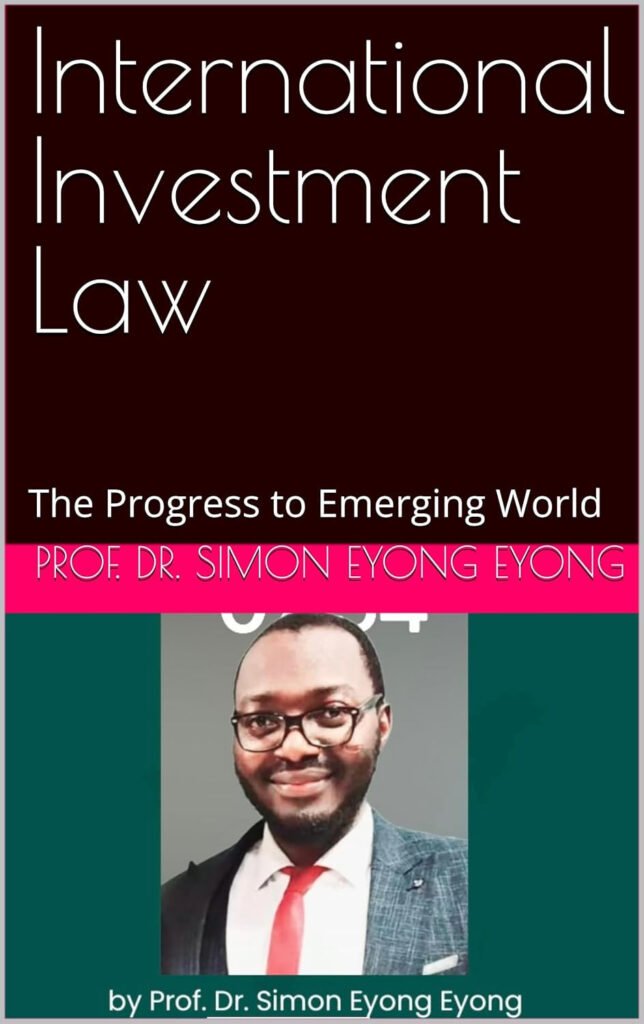
International Investment Law: The Progress to Emerging World Kindle Edition
In a world where capital flows like a river, sometimes turbulent and often unpredictable, ‘International Investment Law’ takes readers on an enlightening journey through the labyrinth of arbitration. This comprehensive guide unravels the core principles and regulations that underpin the investor-state relationship.
Beginning with a historical overview, the book sets the stage by addressing landmark conventions such as the Convention on the Settlement of Investment Disputes Between States and Nationals of Other States. It delves deep into the Permanent Court of Arbitration’s optional rules, examining how these frameworks shape the landscape of international finance and conflict resolution. The narrative crescendos as it explores the Transatlantic Trade and Investment Partnership, highlighting both the promises and pitfalls of investment protection.
The book also scrutinizes the UNCITRAL Rules on Transparency, seeking to illuminate the shadows of secrecy that sometimes cloak arbitration proceedings. With each chapter, readers will uncover the truth about the investor-state arbitration system, grappling with the question of whether this powerful mechanism should remain solely in the hands of states. As illuminating as it is provocative, ‘International Investment Law’ challenges conventional wisdom, urging stakeholders to reconsider the balance of power in these critical disputes. The reader’s journey culminates in a rich discourse on the interplay between investment protection and the rights of states, advocating for a more harmonious relationship in an increasingly interconnected world.
Justice: The pursuit of justice in investor-state arbitration, balancing power dynamics.
Transparency: The need for transparency in arbitration to uphold public trust and accountability.
Sovereignty: The intricate relationship between state sovereignty and investor rights.
Reform: The necessity for reforms to create a fairer system for all stakeholders.
The Evolution of International Investment Law: Tracking how provisions adapt, particularly during crises, like the earth sustaining its flora.
Bilateral Trust Building: Unraveling the delicate threads of diplomacy that manifest through bilateral agreements. Historical Impacts: Exploring the repercussions of treaties driven by their historical placement, shaping present governance.
Dispute Arts: The alluring complexity of conflicts and arbitration, metamorphosing over time into vital learning struggles.
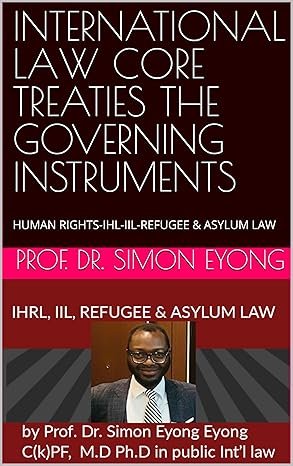
INTERNATIONAL LAW CORE TREATIES THE GOVERNING INSTRUMENTS : HUMAN RIGHTS-IHL-IIL-REFUGEE & ASYLUM LAW
International Human Rights Law An overview of international human rights law and its significance. This chapter introduces the concept of international human rights law, tracing its historical development, core principles, and the role of various international organizations in its promotion and enforcement.
Genocide and Its Prevention Explores treaties addressing genocide and accountability mechanisms This chapter focuses on the 1984 Convention on the Prevention and Punishment of the Crime of Genocide, detailing its provisions, significance, and the challenges in enforcement, accompanied by relevant case law.
Prohibition of Torture and Inhumane Treatment Examines treaties against torture and enforced disappearances. An in-depth analysis of the 1948 Convention Against Torture and the 2006 International Convention for the Protection of All Persons from Enforced Disappearance, focusing on definitions and legal standards.
Refugees and Asylum Seekers Discusses protections for refugees and stateless persons. Focusing on the 1951 Convention Relating to the Status of Refugees, this chapter reviews the rights of refugees and the obligations of states.
Administration of Justice in International Law Focuses on international justice mechanisms. This chapter reviews treaties such as the 1968 Convention on the Non-Applicability of Statutory Limitations to War Crimes and examines structures for international accountability.
Slavery and Slavery-Like Practices Introduction to the concept of slavery and the framework established by the Slavery Convention. This chapter covers the history and context of slavery, introducing the 1926 Slavery Convention as the first significant international legal instrument against slavery. It will analyze the provisions of the Convention and its impact on subsequent legal frameworks.
Asylum Seekers and Refugees Introduction to treaties protecting asylum seekers and refugees. This chapter addresses the 1951 Convention Relating to the Status of Refugees and outlines the importance of international protection for displaced persons.
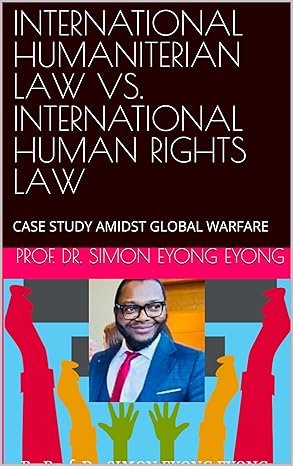
INTERNATIONAL HUMANITERIAN LAW VS. INTERNATIONAL HUMAN RIGHTS LAW: CASE STUDY AMID GLOBAL WAR
This book seeks to create a comprehensive understanding of the interplay between International Humanitarian Law (IHL) and International Human Rights Law (IHRL), particularly through the lens of recent global conflicts. By dissecting key case studies from various regions and contexts, the book aims to inform policy makers, legal practitioners, and scholars about the importance of these legal frameworks in protecting human dignity during times of crisis.
The exploration of specific cases, including those from Nicaragua, the United States, and Europe, Middle East and Africa will highlight the challenges and successes in enforcing these laws. Ultimately, the book aims to advocate for stronger legal protections and collaborative approaches to human rights and humanitarian issues, fostering a more just and humane global society.
THE RULE OF LAW IN INTERNATIONAL PEACEKEEPING MISSION IN MODERN WARFARE: WITH CIVILIAN POPULATION AS VICTIMS
The goal of this book is to critically analyze the role of law in contemporary peacekeeping missions, particularly in the context of modern warfare and its implications for civilian populations. This book aims to provide a comprehensive overview of historical and contemporary legal instruments that govern peacekeeping efforts, focusing on their effectiveness and the challenges faced in ensuring the protection of civilian rights amidst conflict.
By examining various peacekeeping missions through the lens of international law, this book seeks to educate policymakers, scholars, and practitioners on the importance of integrating legal frameworks into peacekeeping operations and the necessity of holding accountable those who violate the rights of civilians in war zones. Ultimately, this text aspires to contribute to the ongoing discourse on international law, human rights, and the ethical responsibilities of nations engaged in peacekeeping efforts.
Humanitarian Law Without a Tribunal is a Circus for Escape Crimes:: The Cry of Ukraine, Sudan, Gaza, and Cameroon
Chapter structure and a summary of the content of each chapter:
The Fabric of Forgotten Laws:
Let’s delve into the origins and evolution of international humanitarian law as we sweep through cobwebbed archives and pristine conventions, vividly bringing to life The Geneva Conventions, the Rome Statute, and other pivotal treaties that whisper amidst the ruins of war. Echoes from Ukraine: Witness the plight of the embattled Ukrainian soul, encapsulated in vivid imagery that describes a land torn by conflict, intertwining personal stories with the grim realities of the International Criminal Court while grappling with loss and survival amid grey skies and fallen monuments.
Words Carved in Sudanese Dust: Explore the stark landscape of human rights violations in Sudan, where the desolation is disrupted by tales of courage and resilience, as survivors and lawyers tirelessly fight for justice among bombing craters that pierce the parched earth. Gaza: A Labyrinth of Stone and Silence: Envelop the reader in Gaza’s embrace of shadows, highlighting stories that weave through the remnants of homes and shattered dreams, illustrating the crippling machinery of international neglect and the urgent need for a humanistic outlook in preservation and advocacy.
Cameroon’s Disenchantment: Submerge into the struggles of Cameroon, delving into the anguish and cries for justice resonating amongst mountains and valleys, connecting the urgency for recognition and aid within this vibrant yet beleaguered nation, framed against the backdrop of vivid landscapes.
An African Conundrum: Untangle the complexities of the African-Union frameworks, charters, and legal systems battling the malevolent shadows of oppression, exploring color and rhythm from demographics while boasting a call for equanimity and strength.
Imagining Justice – The Court & Consequence: Intricately assess the role of courts and the persistent hope for justice on a global scale; tug at the psychological depths of expectation as both victims and advocates navigate the whims of jurisdiction in sync with historical legacies. The Symphony of Human Rights: Capture stories of activists closing the gap between lifeless codes and fierce living spirits who narrate their battle songs for change caught in an anthem of bravery through the expansive chords of the international conventions.
The Human Heart and the Construct: Unearth the concealed tissues of faithful engagement as emotions battle amidst statutes, translating the arcane languages of law into raw human experiences echoing boldly in vivid colors over monotonous codes. The Atlas of Solidarity: Present a call-to-arms narrative, depicting interconnectedness between practitioners globally, anointed by empathy, which can bridge geographical divides with advocacy wings unfurling, urging readers to recognize their role in fostering a global consciousness.
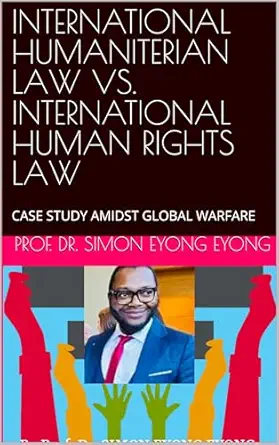
INTERNATIONAL HUMANITERIAN LAW VS. INTERNATIONAL HUMAN RIGHTS LAW: CASE STUDY AMID GLOBAL WAR
This book seeks to create a comprehensive understanding of the interplay between International Humanitarian Law (IHL) and International Human Rights Law (IHRL), particularly through the lens of recent global conflicts. By dissecting key case studies from various regions and contexts, the book aims to inform policy makers, legal practitioners, and scholars about the importance of these legal frameworks in protecting human dignity during times of crisis.
The exploration of specific cases, including those from Nicaragua, the United States, and Europe, Middle East and Africa will highlight the challenges and successes in enforcing these laws. Ultimately, the book aims to advocate for stronger legal protections and collaborative approaches to human rights and humanitarian issues, fostering a more just and humane global society.
World Crimes In Today's International Law: Custodian of the law as Perpetrators
The central argument of the book World Crimes in Today’s International Law: Custodians of the Law as Perpetrators by Prof. Dr. Simon Eyong, which critiques the selective application of international law.
The book argues that international organizations and powerful nations, which are typically seen as the enforcers or “custodians” of international law, sometimes act in contradictory roles as the actual perpetrators of international crimes.
Selective Justice: The law is often applied unevenly, with African nations and their leaders frequently facing prosecution by the International Criminal Court (ICC), while powerful nations, such as the US, Russia, and China, often evade accountability due to geopolitical influence and jurisdictional constraints.
The existing system, which relies heavily on state cooperation and UN Security Council referrals, allows powerful non-member states to shield themselves and their allies from prosecution, thus fostering a culture of impunity.
The work calls for a critical analysis of how global organizations, meant to defend justice, can be perceived as instruments of injustice or as engaging in actions that amount to international crimes.
Under international law, individuals can be held criminally responsible for the “core international crimes,” which are the gravest crimes of concern to the international community as a whole.
Genocide:
Acts committed with the intent to destroy, in whole or in part, a national, ethnical, racial, or religious group.
Crimes against humanity: Widespread or systematic attacks directed against any civilian population, such as murder, extermination, enslavement, deportation, and torture.
War crimes:
Grave breaches of the Geneva Conventions and other serious violations of the laws and customs applicable in armed conflicts.
The crime of aggression:
The planning, initiation, or execution of an act of using armed force against the sovereignty, territorial integrity, or political independence of a state.
Individuals can be held accountable for directly committing these crimes, or for other forms of involvement such as planning, ordering, aiding and abetting, or through command responsibility.
Custodians of the Law:
The primary institutions responsible for investigating and prosecuting these crimes are the national courts of individual states (operating under principles of territorial or universal jurisdiction) and the ICC, which acts as a court of last resort when national jurisdictions are unable or unwilling to act.
However, as the book highlighted, the effectiveness of these systems is often limited by political realities and power dynamics.
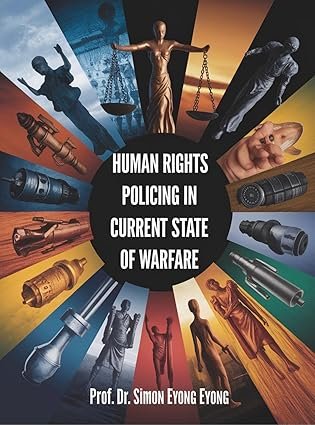
International Human Rights Law : Policing in Current State of Warfare
Historical Framework
The aftermath of World War II marked a turning point in global consciousness regarding human rights. The unimaginable horrors of the Holocaust, the mass killings in various theaters of war, and the widespread atrocities that permeated the conflict catalyzed a profound awakening to the imperatives of safeguarding human dignity. In a world that had witnessed the depths of inhumanity, a call for a unified declaration that enshrined fundamental rights for all individuals became not only desirable but necessary. This subchapter seeks to delineate the historical framework leading to the creation of the Universal Declaration of Human Rights (UDHR) in 1948, highlighting the catalysts, key figures, and philosophical underpinnings that shaped this vital document.The devastation wrought by World War II necessitated introspection about the moral and ethical beliefs that had governed societies. Millions had perished; countless others experienced unfathomable suffering, loss, and displacement. The Nuremberg Trials, which aimed to hold war criminals accountable, underscored the global consensus that individuals possess inherent rights that must be respected, regardless of the state in which they reside. The atrocities of the war became a stark reminder that civilization’s progress could easily regress into chaos. As nations sought a remedy to this crisis, the desire for a universal standard for human rights began to take root.In 1945, the United Nations was established as a response to the failures of the League of Nations and the brutal consequences of unchecked nationalism and totalitarianism. The founding charter of the UN explicitly expressed a commitment to fundamental human rights, aiming to ensure the prevention of future atrocities.

Simon's Cat: Beyond the Fence
Simon Tofield’s animations have taken YouTube by storm. Now, the feline Internet phenomenon makes his way onto the page in this first-ever book based on the popular animated series. Simon’s Cat depicts and exaggerates the hilarious relationship between a man and his cat. The daily escapades of this adorable pet, which always involve demanding more food, and his exasperated but doting owner come to life through Tofield’s charming and hilarious illustrations.
Preserving our heritage, empowering our people, and building a united future for generations to come.